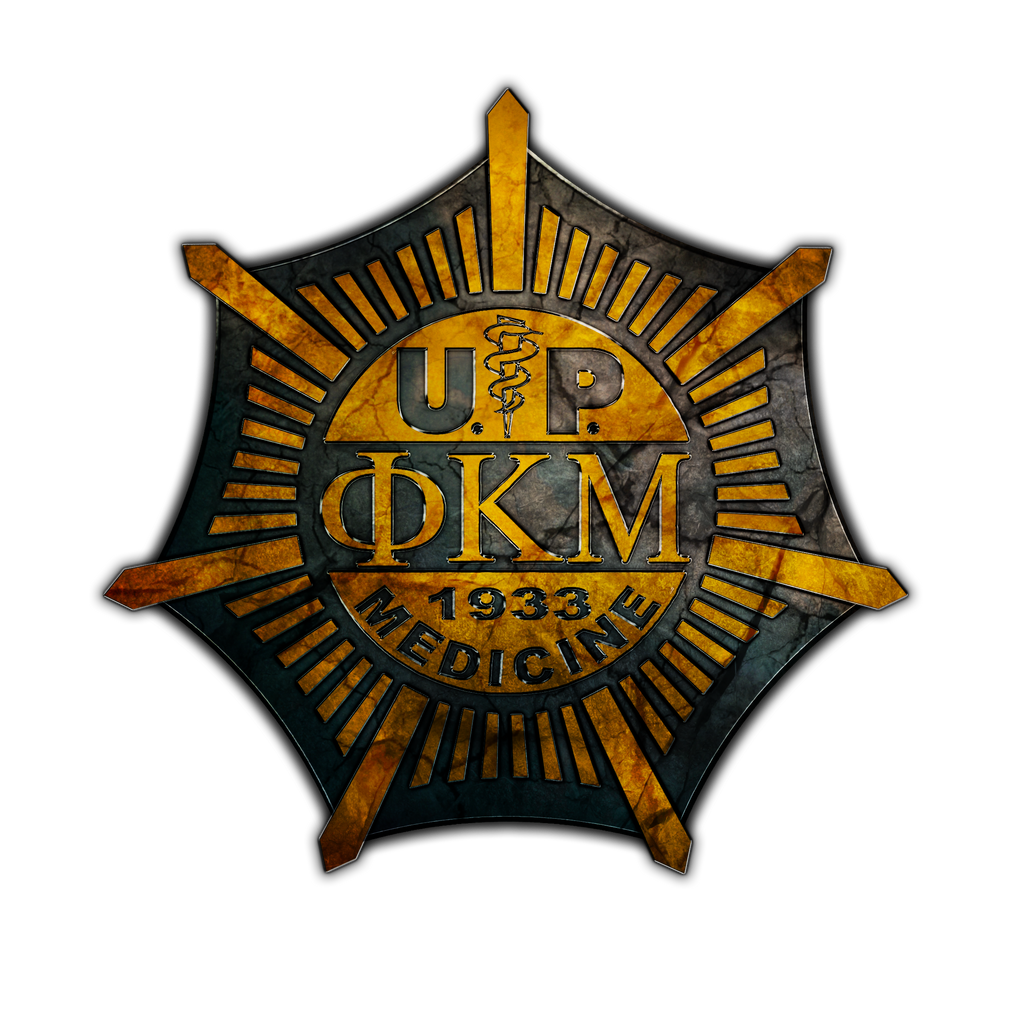
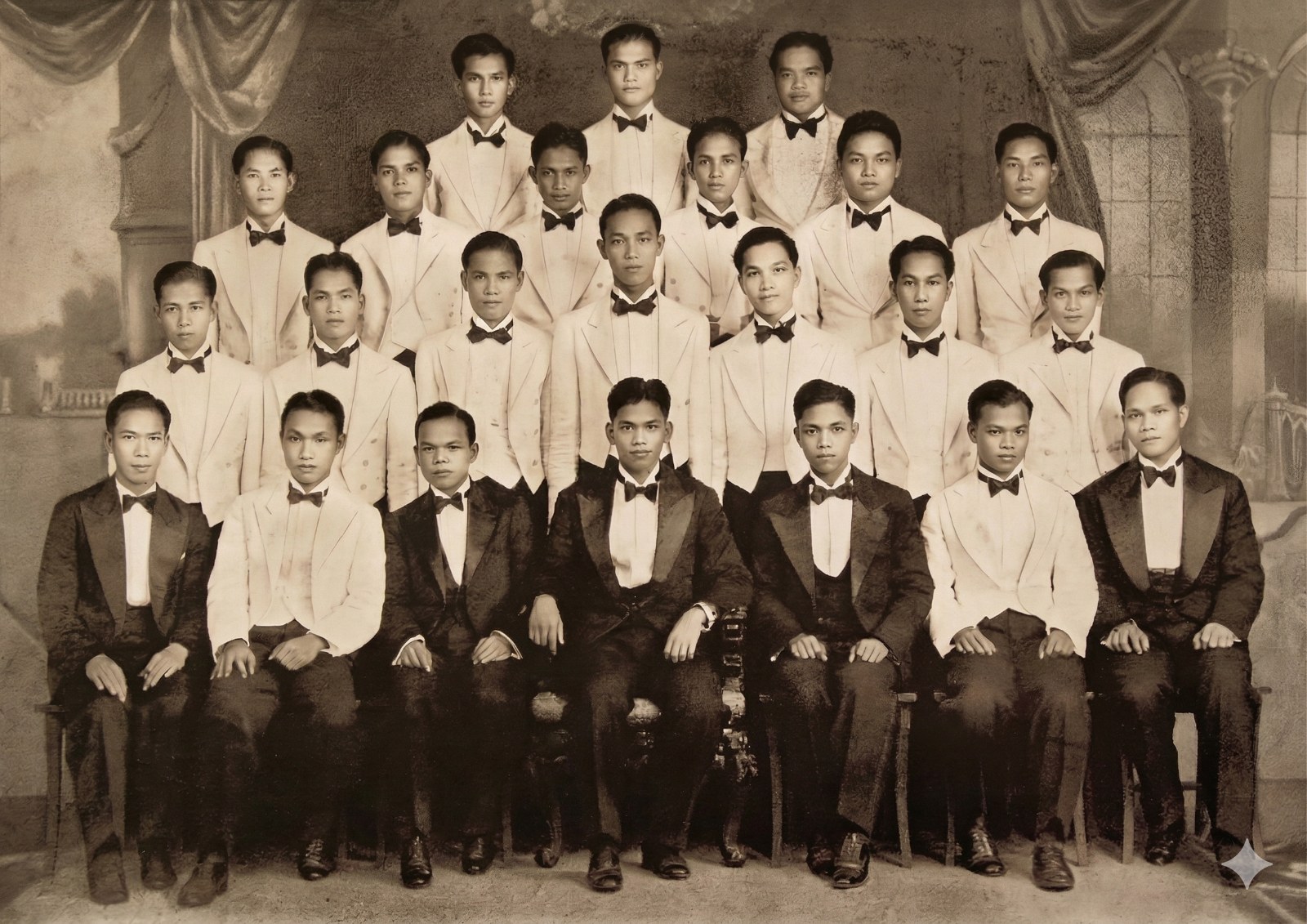
In the middle of the first semester of 1933, thirty-five young and enterprising medical students of the University of the Philippines banded together at the amphitheater of the College of Medicine and pledged to bind themselves to an everlasting brotherhood. The Greek letters "PHI KAPPA MU," conceived by then-intern Luis F. Torres, Jr. to stand for the "Fraternity of the College of Medicine," became the Fraternity's insignia — a seven-cornered golden sunburst of forty-nine rays with the Greek initials across the center.
From the amphitheater at Padre Faura to the embattled wards of the Philippine General Hospital during World War II, through the specialization era of the 1970s to the present day, the Brotherhood has produced four Secretaries of Health, three Chancellors of UP Manila, more than twelve Deans of the UP College of Medicine, the Father of Modern Anesthesiology (who brought the first anesthesia machine to the Philippines), the Father of Burn Surgery, and the first ISO-certified government hospital director in the Philippines. As the Blackbook records: "There was and always will be the spirit of BROTHERHOOD. Today the spirit burns even brighter and will continue to glow in the many years to come."
❝
"The PHI KAPPA MU shall foster pride and growth by illuminating its achievements as a Fraternity and the accomplishments of its members individually. It shall strengthen the bond among its members and assure its existence guided by its Cardinal Virtues. It shall promote excellence in the academic and professional practice of medicine through mentorship, collegiality and reasonable assistance. It shall serve the welfare of the Filipino nation in particular, and mankind in general, through research and outreach programs."
Ψ
Brotherhood
The covenant between Brods transcends institution, specialty, and generation. It is forged in the wards and sealed in the OR.
✦
Excellence
Mediocrity has no place in the Phi. Every Brod is expected to push the frontier of Philippine medicine.
⊕
Service
The stethoscope is a tool of privilege. Every Brod carries the obligation to serve the communities that cannot serve themselves.
∞
Legacy
We stand on the shoulders of the Brods who came before us. We build so that the Brods who come after us may stand taller.
The Phi Kappa Mu Pin — Seven-cornered golden sunburst of 49 rays, Est. 1933
The Numbers
Nine Decades of Philippine Medicine
1933Year of FoundingAugust 17, UP College of Medicine
35Founding FellowsClass of 1933–1934
4Secretaries / Ministers of HealthGarcia · Estrella · Ona · Herbosa
3+Chancellors of UP ManilaHerrera · Ramirez & more
12+Deans of UPCM Were BrodsUP College of Medicine
2033The Centennial YearAugust 17, 2033
The Great Scroll
A Century Written in Sutures.
From the amphitheater at Padre Faura to the vision of 2033 — the unabridged history of the Phi.
Chapter I
The Genesis
Thirty-Five Students. One Covenant.
August 1933, thirty-five young medical students at the University of the Philippines College of Medicine gathered in the amphitheater above the morgue at Padre Faura and pledged to bind themselves to an everlasting brotherhood. The "Fraternity of the College of Medicine", as Intern Luis F Torres Jr. conceived the name, was a worthy fit. "PHI KAPPA MU", unbeknownst to them would be more than a name, it has become a legacy.
"In all these, one thing stands out — there was and always will be the spirit of Brotherhood."
Chapter II
The Wards of PGH
Brotherhood Under Fire.
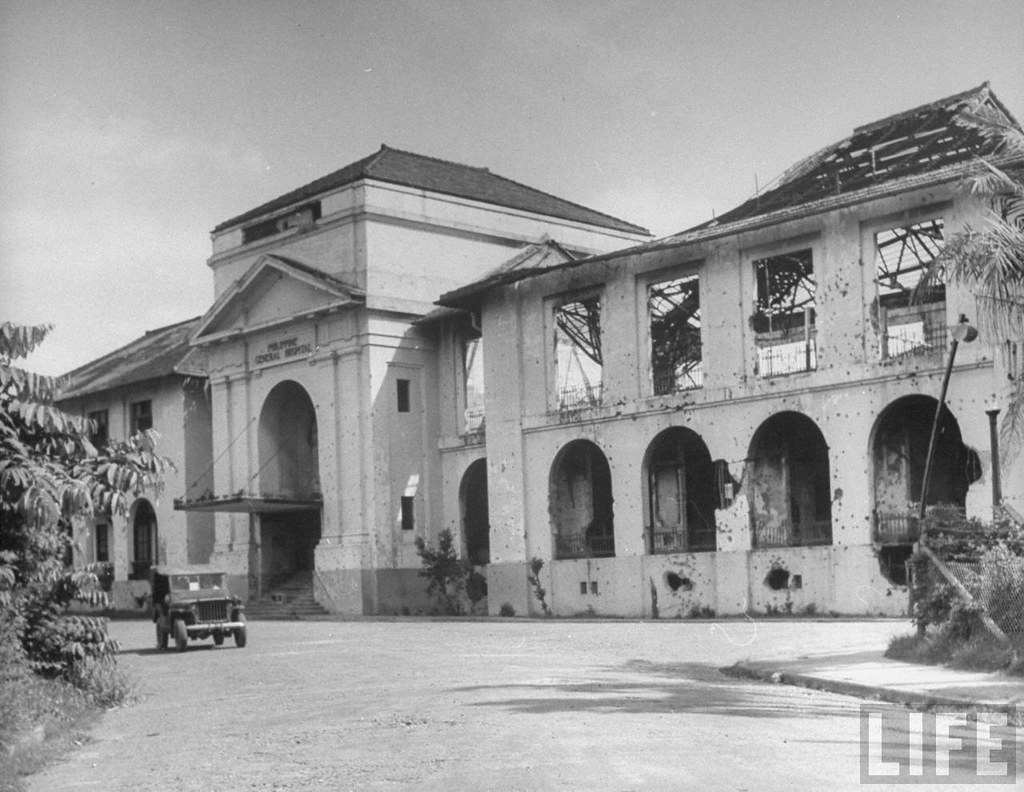
When Japanese forces descended on Manila in December 1941, the Philippine General Hospital became a battlefield of a different kind. Brods of the Phi remained at their posts within the wards of PGH, operating with minimal supplies amid wartime destruction. The Philippine General Hospital — already the clinical home of Phi Kappa Mu since 1933 — bore bullet holes and shell damage across its American colonial facade, as documented in Life Magazine photographs of 1945. The Brotherhood did not fracture under occupation. The fraternity's president during the outbreak of war was Brod Florentino B. Herrera Jr. (Superior Exemplar 1940–1941), followed by Herminio T. Velarde, Jr., Conrado S. Dayrit, and Quintin J. Gomez (1943–1944). Through the liberation of Manila, Brod Gomez treated wounded soldiers at the 155th U.S. Army Station Hospital in Mandaluyong — encounters that ignited his determination to revolutionize Philippine anesthesiology after the war.
"The UP College of Medicine and the Philippine General Hospital have been and will be the beneficiaries of those past and future undertakings of the Fraternity."
Chapter III
Building Modern Medicine
Fathers of Modern Philippine Medicine
In the post-war reconstruction era, Brod Quintin Juan Gomez (b. April 12, 1919, Manila; d. September 30, 2003) — son of Dr. Angel K. Gomez, Dean of the UP College of Veterinary Medicine — returned from anesthesiology residency at the University of Illinois Medical School in Chicago under Dr. Max Sadove (1946–1948) and organized the first dedicated anesthesia section within the Department of Surgery at PGH in 1949. He hand-carried the first anesthesia machine to the Philippines — a portable army-type to-and-fro Heidbrink machine — enabling the country's first exploratory craniotomies, thoracotomies, and mitral commissurotomies. In 1954, he co-founded the Philippine Society of Anesthesiologists with six other pioneers. In 1967, he became the founding Editor-in-Chief of the Philippine Journal of Anesthesiology. His WFSA election speech in 1976 declared: one of the most important objectives of the federation is the teaching and training of anesthesiology all over the world. From 1976 to 1980, he served as President of the World Federation of Societies of Anesthesiologists — the first Filipino to hold that office.
"His reflections from 40 years ago still ring true today."
Chapter IV
The Institution Builders
Deans, Chancellors, and Reformers.
Phi Kappa Mu Brods reshaped Philippine medical education from the highest academic offices. Brod Florentino B. Herrera Jr. (Superior Exemplar 1940–1941; Dean, UPCM 1967–1979) was revered as an institution builder. He established an Extraordinary Curriculum Committee that produced a community-focused, ladderized medical curriculum — the direct precursor to the School of Health Sciences in Palo, Leyte. He revived the Postgraduate School of Medicine and became the founding and first Chancellor of the Health Sciences Center, precursor to UP Manila. He famously taught students that doctors must treat the patient's humanity — their fears and insecurities — not just the infection. The UPCM medical library carries his name: the Dr. Florentino B. Herrera, Jr. Medical Library. Brod Alfredo T. Ramirez (Superior Exemplar 1960–1961; Dean, UPCM 1991–1994) — the Father of Burn Surgery in the Philippines — rewrote the UPCM mission statement to incorporate community orientation and primary health care. His legacy is enshrined in the Alfredo T. Ramirez Burn Center at PGH.
Chapter V
Secretaries of Health
From the OR to the Cabinet.
Four Phi Kappa Mu Brods have served as the nation's chief health officer. Brod Enrique M. Garcia (Phi1934, UPCM Class 1937, valedictorian) served as Minister of Health from 1979 to 1986 — accelerating the National TB Control Program, launching the Control of Diarrheal Diseases program in 1980, and pioneering year-round immunization. Brod Felipe Ipe Estrella Jr. (Phi1950) — the Father of the Modern PGH — transformed PGH as its Director (1986–1994), modernizing facilities and establishing its Outpatient Department, before serving as Secretary of Health in 1998. Brod Enrique Ike Ona (Phi1957), a pioneering transplant surgeon, transformed the NKTI into the Philippines first ISO-certified government hospital, then served as Secretary from 2010 to 2014, overseeing the landmark Tobacco and Alcohol Excise Tax Reform Act of 2012 and the Reproductive Health Act. Brod Teodoro Ted Herbosa (Phi1979), trauma surgeon and disaster medicine expert, former DOH Undersecretary 2010–2015, has served as Secretary of Health since 2023.
Chapter VI
The Centennial
One Hundred Years. One Covenant.
On August 17, 2033, the Brotherhood of Phi Kappa Mu will celebrate a century of unbroken existence — the oldest medical fraternity in Asia, still standing, still operating, still bound by the same spirit pledged in the amphitheater of the UP College of Medicine in 1933. The PHI KAPPA MU stands as a bastion of professionalism and excellence — recognized as the premiere medical fraternity in the Philippines, rendering exemplary service to humanity with honor, dignity, and integrity.
"Today the spirit burns even brighter and will continue to glow in the many years to come."
The Brotherhood
Among the Brods Who Shaped Philippine Medicine
These Brods represent the generations of Phi Kappa Mu — each carrying the seal forward.
ΦΚΜ
Brod · Batch 1944 · Alpha Chapter
Dr. Quintin Juan Gomez, M.D.
M.D., UP College of Medicine, 1944 · Superior Exemplar, 1943–1944
Father of Modern Anesthesiology in the Philippines · Brought the first anesthesia machine to the Philippines · Co-founder, Philippine Society of Anesthesiologists, 1954 · Founding Editor-in-Chief, Philippine Journal of Anesthesiology, 1967 · President, World Federation of Societies of Anesthesiologists, 1976–1980
"Continuing education and updating ourselves are our key resources for professional growth."
FB
ΦΚΜ
Brod · Batch 1940 · Alpha Chapter
Dr. Florentino B. Herrera, Jr., M.D.
M.D. · Superior Exemplar, 1940–1941 · Dean, UPCM, 1967–1979 · First Chancellor, UP Manila
Institution Builder · Created the community-focused UPCM curriculum and School of Health Sciences model · Founding Chancellor, UP Health Sciences Center (now UP Manila) · The UPCM medical library bears his name: Dr. Florentino B. Herrera, Jr. Medical Library
"Doctors must treat the patient's humanity — their fears and insecurities — not just the infection."
LF
ΦΚΜ
Brod · Batch 1933 · Alpha Chapter
Dr. Luis F. Torres, Jr., M.D.
M.D., Valedictorian, UP Class 1933 · Founding Fellow, Phi Kappa Mu
Creator of the PHI KAPPA MU name and insignia · Pioneering Urologist and Chief of Urology, PGH · Described by colleagues as a fast operator who was dapper, debonair — performing operations that no other urologist dared attempt
"LFT Jr was Valedictorian in his UP Class 33 — he had a strong macho, dapper, debonair personality, and was a fast operator."
Names of active Brods are protected under the Brotherhood's privacy covenant. Full directory accessible after Scrub In authentication.
The Brotherhood's Legacy
Hall ofGiants
These are the Brods who did not merely practice medicine — they built it. Surgeons, deans, and pioneers whose work remade Philippine healthcare.